
Adams County Sex Offender Checks
Washington’s public search is commonly called WASOR. The Washington Association of Sheriffs and Police Chiefs maintains the statewide portal under RCW 4.24.550, while local sheriffs register people, classify risk, and carry out local disclosure duties. Searchers may filter by Adams County, city, ZIP code, last name, or an address shown by hundred block.
Begin with a name when the identity is known. Use the county, city, ZIP, or map for neighborhood awareness. A no-result screen needs care. It can reflect spelling, the selected jurisdiction, a recent move, update timing, or a Level I record that is not ordinarily published. Contact local law enforcement about suspected noncompliance rather than drawing a firm conclusion from one search.
Adams County Registry Uses Hundred Blocks
The map uses a hundred-block address instead of presenting an exact door as the core location display. That design supports geographic awareness while following Washington’s public-disclosure framework. Search by a nearby address, then read the map and list results together. A mapped point should not be treated as permission to visit, watch, or confront anyone.
The WASPC sex-offender information page is the official Washington entry point and explains the registry’s safety purpose.
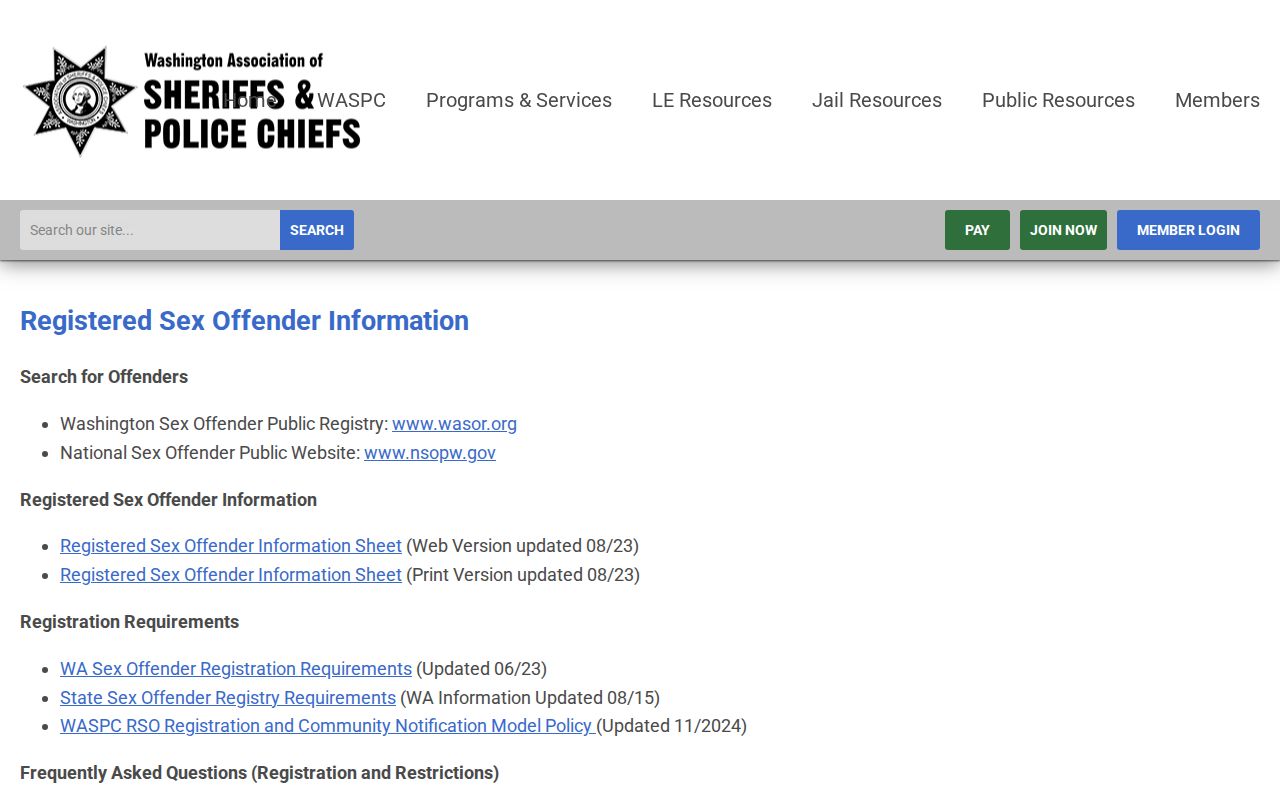
The official entry image directs Adams County readers to the government-supported search rather than an unofficial people-finder.
Note: A hundred-block map supports area awareness but does not authorize contact, surveillance, threats, or any act aimed at a listed household.
Washington Sex Offender Public Registry Searches
Use only the official WASOR registry and its stated controls. Different routes accept different fields, so no single box is mandatory for every type of search. A county filter can show public Adams County entries, while a last-name route is better for checking a known identity. Address and map controls support place-based review.
- Open WASOR through the official WASPC registry entry and read the conditions governing lawful use.
- Choose a name search or select Adams County, city, ZIP code, or a hundred-block address.
- Compare the result with the known name, photograph, physical description, conviction information, and mapped area.
- Use the tip or correction route for a suspected error, or contact law enforcement about suspected noncompliance.
| Field | Type | Required | How it works |
|---|---|---|---|
| Last name | Text | Route-dependent | Searches a known registrant name. |
| County | Dropdown | No | Select Adams for county-level results. |
| City | Text or dropdown | No | Narrows the geographic search. |
| ZIP code | Text | No | Uses a five-digit area. |
| Address or hundred block | Address | No | Supports a map-centered area search. |
| Alert address and email | Signup | For alerts | Sends updates for moves within one mile. |
One-Mile Adams Registry Alerts
WASPC offers email alerts when a registry update places a registrant within one mile of a selected address. This is a useful supplement to a one-time Adams County lookup because registry locations can change. Use an address and email through the official signup, then keep the notice in context. An alert reports a registry update, not a new offense.
Alerts do not replace a search after a spelling change, a move across a county line, or a concern involving another state. They also do not override risk-based public visibility. When a listing seems wrong, use the portal’s tip or correction function and provide facts to law enforcement. Do not try to correct the person or location through direct contact.
Registry Profiles: What They Show
Washington law and WASPC materials support a focused public field set. The public profile helps distinguish people and understand the reason for registration. It does not turn the registry into a full criminal-history file, a complete court docket, or a live custody record. For the full case outcome, use the court of record.
| Name | Identifies the listed registrant; compare it carefully with other known details. |
|---|---|
| Photograph and description | Provides a visual and physical-description check without collecting private profile data here. |
| Address area | Shows the registered location by hundred block for public mapping. |
| Relevant convictions | Lists the qualifying conviction information made public under state rules. |
| Risk level | Guides public visibility and the reach of community notification. |
| Map and report tools | Places the public location and provides a route for tips or corrections. |
Vehicle data, school information, employer details, tattoos, and exact verification dates should not be assumed. Those fields were not confirmed through a profile inspection, which would have required selecting a private person.
Adams County Registry Search Layers
WASOR is authoritative for Washington public registry information and local Adams County entries. The U.S. Department of Justice National Sex Offender Public Website, or NSOPW, searches participating jurisdictions across state and tribal lines. It is the better second layer when a person may have moved or when the location history crosses Washington’s border.
The official NSOPW search supplies that national cross-state view.
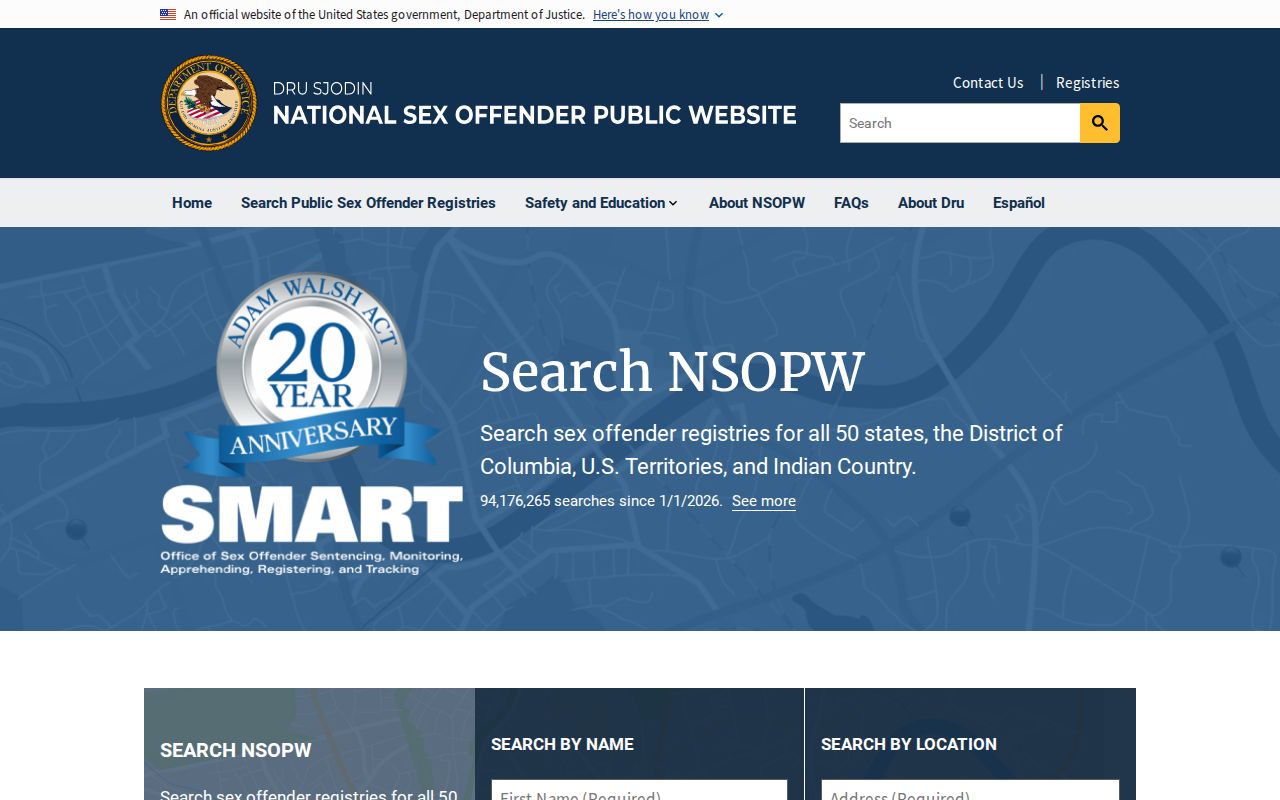
The national interface broadens geographic scope, while Washington authorities remain the source for a Washington listing and current local facts.
Use the same cautious matching method in both systems. Compare the available name, photo, description, conviction, and location. A similar name is not enough. Report a possible mismatch through the official correction or law-enforcement route.
Registration Levels and Duties in Washington
Risk level controls the scale of public notification. Conviction class generally controls registration duration. These are different measures. A Level II label does not itself mean a fixed number of registration years, and a lifetime registration period does not by itself define the public risk label.
| Classification | Visibility or duty | General duration |
|---|---|---|
| Risk Level I | Low risk; ordinarily not published, except specified transient, no-fixed-residence, or noncompliant cases. | Not set by risk level |
| Risk Level II | Moderate risk; published, with notice that may reach schools, day care, libraries, and groups serving vulnerable people. | Not set by risk level |
| Risk Level III | High risk; published, with public-at-large notification as Washington law provides. | Not set by risk level |
| Adult Class A sex offense | Risk classification separately controls visibility. | Life |
| Adult Class B | Risk classification separately controls visibility. | 15 years |
| Adult Class C and specified gross misdemeanors | Risk classification separately controls visibility. | 10 years |
Juvenile rules changed in 2023. WASPC describes three years for a qualifying age 15 to 17 Class A registration and two years for other covered juvenile registrations. RCW 9A.44.140 controls the detailed rules, so the person’s actual order and statute matter.
Duration can also depend on events and statutory conditions not visible in a short public listing. The safe reading is narrow: use the profile for the public facts it states, and use the governing court order or official agency for a legal status question. Do not calculate an end date by combining a risk level with the adult-class table. The two classifications serve different purposes.
Adams County Sheriff Registration Duties
Adults generally register in person with the county sheriff within three business days after release, after a nonconfinement sentence, or after establishing or reestablishing a residence. Temporary-presence rules can also apply. Confirm appointment details and current hours directly with the Adams County Sheriff before appearing.
The local sheriff records changes and performs risk-classification and notification work within state law. A suspected failure to register should go to law enforcement. Provide the observed facts and location without confronting the person. The portal’s tip function is also an appropriate way to flag a listing or location concern.
If a profile seems incorrect, record the specific public field at issue and use the portal’s correction route. A move can pass through local verification and statewide publication at different times. A factual report gives the Sheriff a clearer starting point than a broad claim that the map must be wrong.
The Washington registration statute sets the underlying duties.
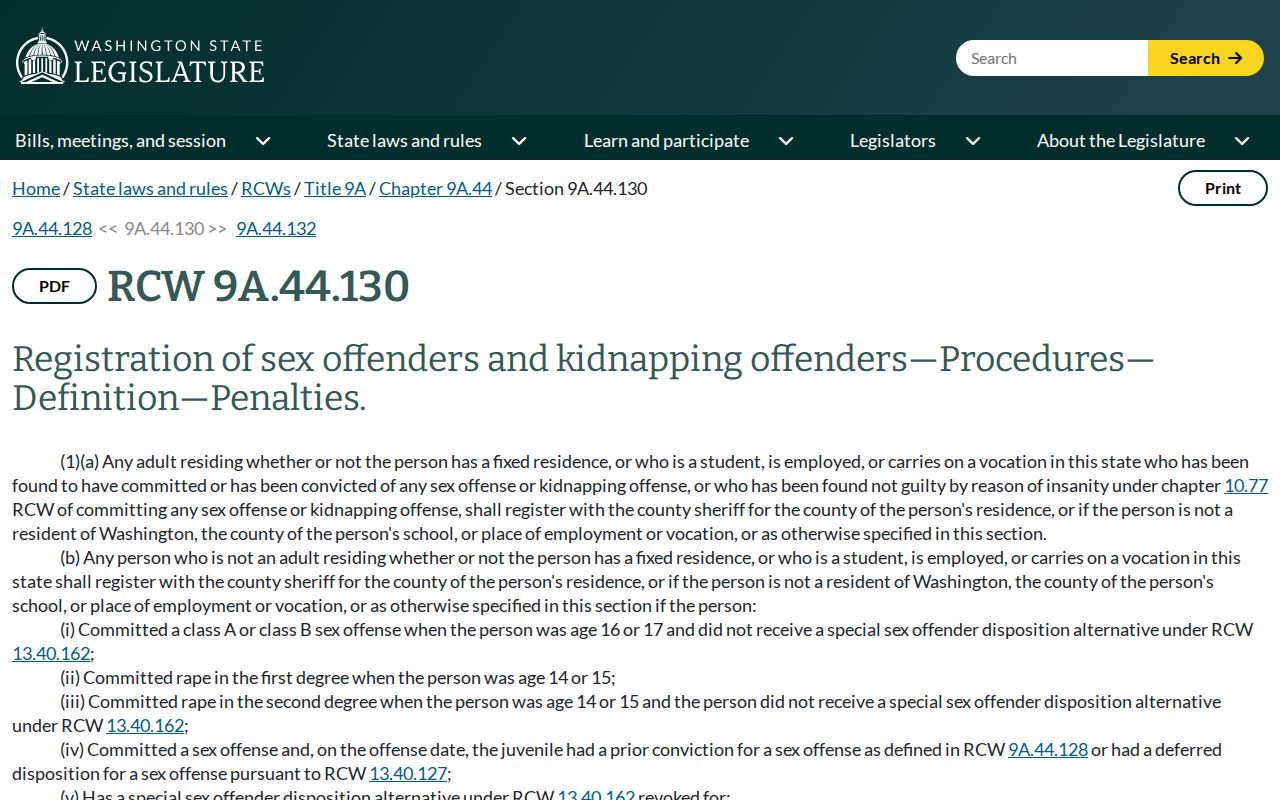
The statute image anchors the timing and registration rules in the official Washington source.
No Universal Adams Registry Distance Rule
Washington does not impose one universal post-supervision residence-distance rule on every registrant. An individual court judgment or DOC supervision condition may impose limits in a specific case. A registry map alone therefore cannot show every condition attached to a person’s sentence or community custody.
For a precise condition, consult the public judgment and sentence if it is available, or the responsible supervising authority when disclosure is lawful. Do not assume that living near a school, park, or child-care site proves a violation. Risk level, registration duration, and individual release conditions must be read as separate parts of the system.
Using Registry Information Lawfully
Registry information supports informed safety planning and community awareness. It should guide calm steps such as reviewing a mapped area, signing up for official alerts, speaking with family about boundaries, and reporting a specific concern through law enforcement. It is not a call for vigilantism.
RCW 4.24.550 governs Washington community notification and risk-based disclosure.
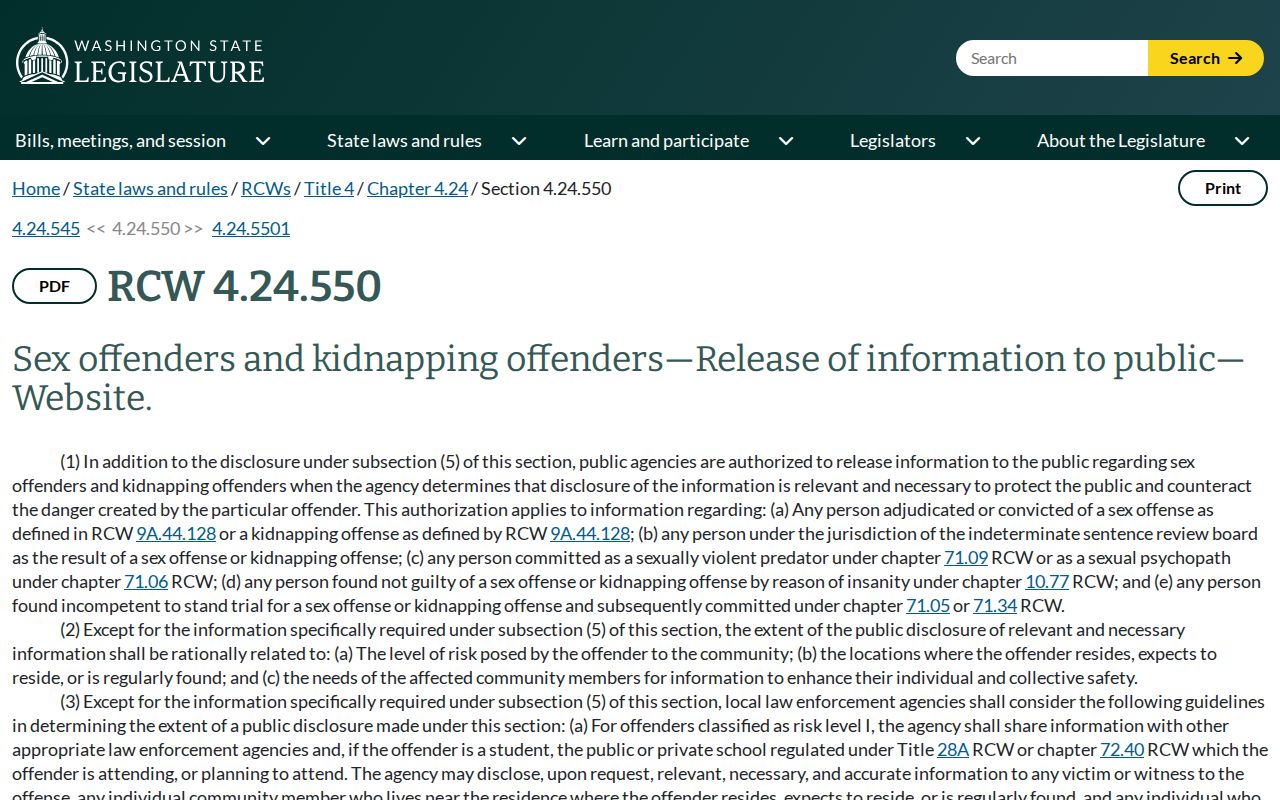
The official law explains why public treatment differs by risk level and why registry use must remain tied to safety.
Misuse is unlawful: Threatening, intimidating, harassing, or vandalizing a registrant or household through registry information can lead to criminal prosecution under Washington law and is forbidden by the official registry warning.
If information appears stale, use the official correction route. If a person may be noncompliant, report that concern to the Adams County Sheriff or other law enforcement. Keep the report factual, and let the agency verify registration duties, moves, and any case-specific restrictions.